Triple Whale — Start free, confirm whether AI engines mention you, and keep the workflow close to Shopify/DTC revenue.
9.1/10
First paid tracker
Otterly.AI — Low published entry price and broad enough engine coverage for a seller who has outgrown a spreadsheet.
8.6/10
Budget GEO tracker
LLMrefs — Use when $79/month, 500 prompts, broad engine coverage, and unlimited projects matter more than ecommerce-native attribution.
8.2/10
Growing prompt program
Peec AI — Better fit when prompt-level tracking, competitors, and source diagnostics become recurring work.
8.1/10
Shopify-native visibility
Glara — Shortlist when SKU-level AI visibility, Shopify data, and product optimization recommendations are the core job.
7.7/10
Content execution
Pixis Visibility — Consider when the team wants visibility gaps to feed content briefs, drafts, and publishing workflows.
7.7/10
All-in-one ecommerce AI
Alhena AI — Consider when product-level visibility should sit beside onsite shopping assistance and support automation.
7.8/10
Enterprise AI monitoring
Scrunch AI — Choose when SOC 2 compliance, GA4 AI referral attribution, and enterprise monitoring depth matter more than entry price.
8.0/10
Existing SEO suite
Semrush AI Visibility Toolkit — Use when your AI visibility workflow needs to sit beside Semrush keyword, audit, competitor, and reporting data.
7.6/10
Enterprise reporting
Profound — Use only when AI visibility is a board-level program with people acting on the data every week.
7.0/10
We independently ranked 11 AI visibility tools for ecommerce, Shopify, and DTC teams in 2026. Start with seller stage and budget, then choose the smallest tracker that can turn AI search data into weekly action.
First move
Start free before buying another dashboard.
Compare by
Store fit, pricing clarity, evidence, and actionability.
Use restraint
Pay only when manual prompt tracking becomes too slow.
Ranked shortlist
#1
Triple Whale
Editor's pick
Ecommerce-native AI visibility tracking for Shopify and DTC teams, with visibility signals tied closer to store performance.
Best for
Shopify / DTC free start
From
Free
Score
9.1/10
Pros
+ Built specifically for ecommerce operators
+ Free AI Visibility entry point
+ Owned-vs-earned citation split
Cons
- Most useful if you also use the broader Triple Whale platform
- Paid platform scales beyond a lightweight tracker
Keyword-based AI visibility tracker with broad answer-engine coverage, 500 prompts, unlimited projects, and unlimited team members on one low published plan.
Best for
budget-sensitive SEO and ecommerce teams
From
$79/mo
Score
8.2/10
Pros
+ Low $79/month public price for 500 prompts
+ Unlimited projects and team members on the published plan
+ Broad engine coverage with citation, competitor, CSV, and API support
Cons
- Not built around SKU, feed, margin, or revenue attribution workflows
- Budget pricing may still be overkill for stores only doing occasional prompt checks
- More keywords or enterprise governance may require upgrades or sales conversations
The strongest value play for teams that want broad AI visibility coverage without enterprise pricing, but it still needs human ecommerce strategy to turn findings into revenue work.
A serious monitoring-first AEO platform for staffed DTC and enterprise marketing teams, but too expensive and too operator-dependent for solo Shopify sellers.
Researched Jul 6, 2026
Pricing checked
Jul 6, 2026
Pricing transparency
clear
Store fit
Independent site
AI coverage
chatgpt, claude, gemini, perplexity, google-ai-mode, google-aio, meta
The most ecommerce-native AI visibility tool in this cluster, with strong Shopify and SKU-level attribution logic, but its useful optimization tier starts well above lightweight trackers and broader engine coverage appears reserved for Enterprise.
A fast-moving AI visibility platform with a useful $99 entry point and execution workflow, but ecommerce buyers should verify engine limits, content quality, and live-account fit before treating the growth story as proof.
The lowest-risk AI visibility starting point for existing Semrush users, but less compelling once AI search needs dedicated prompt, citation, or ecommerce workflows.
A credible commitment-first AI visibility platform for teams that value WebFX's agency depth, but the no-trial buying motion is a real barrier for smaller ecommerce sellers.
TLDR. This independent 2026 matrix ranks 11 AI visibility tools for ecommerce, Shopify, and DTC teams. Start with seller stage and budget, then choose the smallest tracker that can turn AI search data into weekly action.
Most ranking pages in this category answer the wrong question. They ask, “what are the best AI visibility tools?” A Shopify or DTC seller needs a sharper question: “given our store stage, budget, and ability to act on the data, which tool is enough right now?”
That framing matters because a dashboard does not create AI visibility by itself. It can tell you whether ChatGPT, Perplexity, Gemini, Claude, Google AI Overviews, or Amazon Rufus mention your brand. It can show which sources are cited. It may even suggest actions. But the work still lives in product pages, schema, reviews, comparison content, third-party mentions, and refreshed facts.
For the market context behind this ranking, read Why AI visibility matters: the 2026 data. It covers the current traffic-growth, conversion, citation-source, and tracking-gap statistics before you choose a tool.
One more thing before the rankings: several tools on the market publish their own comparison pages where they naturally rank themselves #1. This page is different. Ecom AI Reviews does not sell AI visibility software, so the scores and rankings here follow the same framework across every tool, with evidence labels that tell you how confident each score is. Vendors that self-rank #1 elsewhere - including Alhena AI, Ranketta, and Evertune - appear here at their independently assessed position.
So this hub is a decision matrix, not a feature parade. If you only have one Shopify store, you do not need Profound. If you are already reporting AI visibility to leadership every week, a free snapshot is not enough. Choose the smallest tool that matches the work you can actually do.
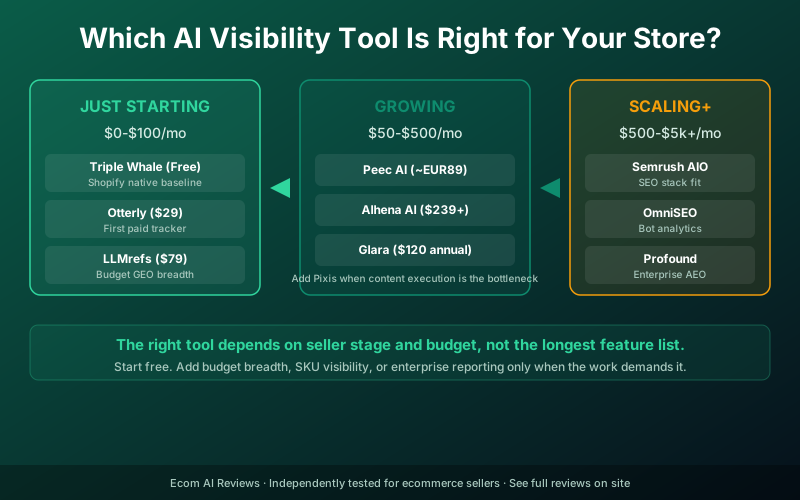
Figure 1. The right starting point changes by seller stage. Start free, automate only when the spreadsheet hurts, and reserve enterprise AEO tools for staffed programs.
Decision Framework
Use seller stage first, budget second, and features third. A long engine list is useful only if those engines match where your buyers search and if someone will act on the findings.
Full coverage, executive reporting, governance, and broad answer-engine monitoring matter more than entry price.
Ecommerce-native means the tool is built around store, product, review, or revenue workflows rather than only brand-level monitoring.
The practical rule: buy the next tier only when the previous tier has produced work you cannot manage manually anymore. If you have not fixed crawler access, product schema, review evidence, and comparison content, a more expensive dashboard will mostly reveal the same gaps in higher resolution.
Comparison Matrix
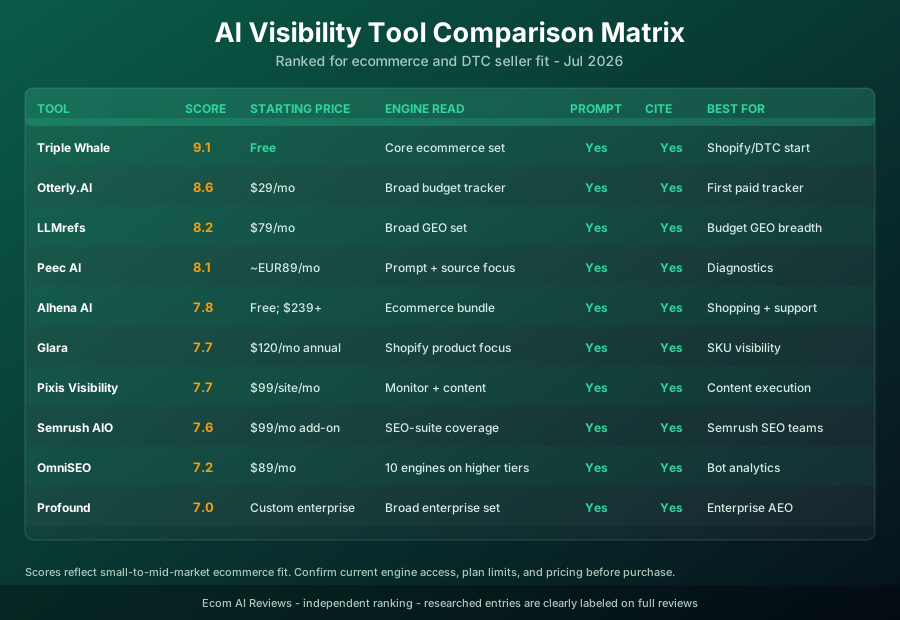
This matrix mixes tools we have reviewed with researched reviews and current tool records. Scores are shown where Ecom AI Reviews has a published record. “Hands-on” means we have used or directly inspected the workflow; researched reviews are marked honestly.
Figure 2. A simplified view of the matrix. The detailed table below adds review status and ecommerce fit.
Tool
Score
Starting price
AI engines covered
Prompt tracking
Citation tracking
Product-level tracking
Best for
Hands-on tested?
Full review
Triple Whale
9.1
Free
ChatGPT, Perplexity, Google AI Overviews
Yes
Yes
Partial: ecommerce-native visibility and revenue context
† Alhena AI is a vendor that publishes its own comparison pages and self-ranks #1 on its own site. Ecom AI Reviews is independent - we do not sell AI visibility software, and every score on this page follows the same framework with evidence labels.
Pricing and engine coverage are volatile. Use this table to shortlist vendors, then confirm current prompt quotas, engine access, refresh frequency, and contract terms before buying.
Engine Coverage
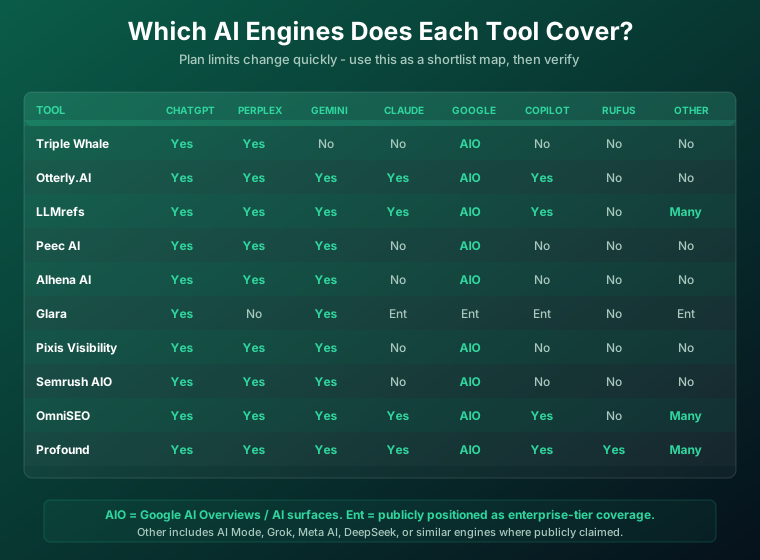
Engine coverage is not a trophy count. More engines only help if your buyers use them and your plan includes them. For most DTC sellers, the first set to watch is ChatGPT, Perplexity, and Google AI Overviews. Gemini, Claude, Copilot, Amazon Rufus, Google AI Mode, Meta AI, Grok, and DeepSeek become more important as your category, channel mix, or reporting needs expand.
Figure 3. Treat engine coverage as a plan-level buying question. A vendor may support an engine in enterprise while excluding it from the tier you are considering.
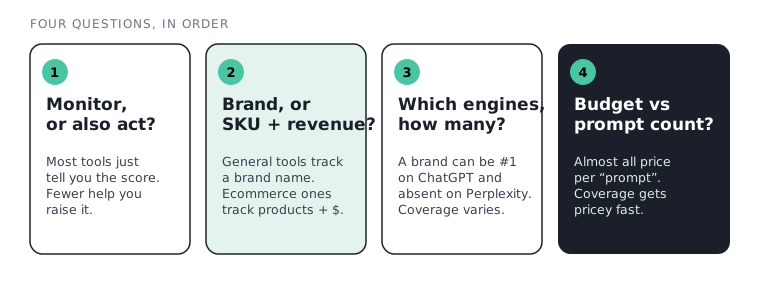
Supplement A. Four buying questions to answer before comparing vendor claims.
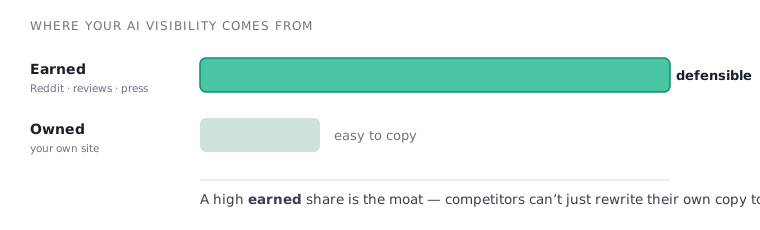
Supplement B. The owned-versus-earned citation split is still the key ecommerce signal.
A Note on Independent vs Vendor Self-Ranking
A pattern worth knowing before you compare tools: several AI visibility tool vendors publish their own ranking or comparison pages where they naturally place themselves at #1. Alhena AI, Ranketta, and Evertune all follow this pattern. It is not dishonest - it is natural marketing. But it means that when you read a ranking page published by a vendor, you are reading that vendor’s own commercial position, not an independent assessment.
Ecom AI Reviews is different by design. We do not sell AI visibility software. We make money when readers use our affiliate links, but vendors cannot buy placement, scores, or ranking position. Every tool on this page is scored against the same five-dimension framework: ecommerce buyer fit, monitoring depth, actionability, pricing value, and evidence quality. Tools we have used or directly inspected carry a “Hands-on tested” label. Tools we have researched from public sources, third-party reviews, vendor documentation, and category tracking carry a “Researched” label.
The practical difference: when Alhena AI ranks itself #1 among visibility tools on its own site, that rank reflects Alhena’s view of the market. When we rank Alhena AI at 7.8 on this page, that score reflects our independent assessment of its ecommerce buyer fit against the same criteria we apply to every tool. Use both as inputs, not as verdicts.
Tool-by-Tool Calls
Just starting: Triple Whale and Otterly.AI
Start with a free manual prompt library and Triple Whale if you are a Shopify or DTC seller. The goal is not sophistication; it is proof. Are you named? Are competitors named instead? Which sources are cited? Does the answer describe your products accurately?
Otterly.AI is the first paid step when monthly manual checks become annoying. It is better for automating brand and citation monitoring than for tying results to SKU-level revenue. That is fine at this stage. You are buying time back, not building an enterprise reporting layer.
Budget GEO breadth: LLMrefs
LLMrefs belongs near the top because the $79 plan is unusually aggressive for a serious AI visibility tracker. The value is not that it is ecommerce-native. It is that budget-sensitive SEO, ecommerce, and agency teams can get broad answer-engine coverage, 500 prompts, unlimited projects, unlimited team members, CSV export, and API access without stepping into enterprise pricing.
Use LLMrefs when the team already thinks in keywords and categories and wants a low-cost way to turn those inputs into AI visibility, citation, and competitor monitoring. Skip it if you need Shopify revenue attribution, SKU-level recommendations, or a free first test.
Growing teams need prompt-level visibility because the questions themselves become assets. You are no longer asking “do we show up anywhere?” You are asking which category prompts, comparison prompts, attribute prompts, and branded trust prompts are worth fixing.
Peec AI fits that job because source and citation diagnostics are the useful middle layer between a spreadsheet and an enterprise AEO platform. OmniSEO belongs here when a team wants a more committed AEO/GEO workflow with broad engine coverage and AI Bot Analytics, especially if crawl diagnostics are part of the problem.
Scrunch AI is the enterprise-monitoring candidate in this price tier. At $250/month, you are buying GA4 AI referral attribution, persona and funnel-stage filtering, and SOC 2 compliance in a monitoring-first platform - not a content execution workflow. It fits a mid-market DTC brand that already routes AI visibility findings to analytics, content, or product teams every week. It is the wrong first tracker for a solo Shopify seller who would exhaust 125 prompts across 4 engines before earning value from the dashboard.
Alhena AI belongs in this stage for a different reason: it is not the cleanest standalone monitor, but it is ecommerce-native and claims SKU-level AI visibility tied to a shopping and support concierge. Shortlist it when the visibility problem is connected to onsite product discovery and support automation, not when you only need a cheaper prompt tracker.
Glara belongs here for Shopify-native AI visibility. Its strongest argument is product-level visibility tied to Shopify, GA, GSC, catalog data, and optimization recommendations. It is the better shortlist when the question is “which products are understood and recommended by AI assistants?” rather than “which brand appears for this prompt?”
Pixis Visibility is the content-execution bet. It is less ecommerce-native than Glara and less budget-broad than LLMrefs, but the $99/site/month entry point and monitor-to-brief-to-draft workflow make it interesting for DTC teams that can actually ship content changes from visibility gaps.
Scaling: Semrush AI Visibility Toolkit and OmniSEO Professional
If your team already runs SEO, content, PR, and analytics through a larger stack, an AI visibility module inside that stack can be more practical than another standalone login. Semrush AI Visibility Toolkit is the clearest fit when your operators already work inside Semrush and want AI visibility beside keyword, audit, competitor, and reporting workflows.
OmniSEO is the stronger shortlist item when the team wants a dedicated AI visibility platform, 10-engine coverage on higher tiers, and AI Bot Analytics for server-log-style crawler diagnosis. The $89 entry tier is useful, but the $349 Professional plan is the more realistic comparison point for broad coverage.
Enterprise: Profound
Profound is the obvious enterprise benchmark and the wrong default for most independent sellers. Its data depth, reporting layer, and broad platform surface are real advantages when AI visibility is a staffed program. They are expensive excess when you only need to know whether AI engines cite your product pages.
If leadership expects AI visibility updates alongside SEO, PR, content, and market intelligence, evaluate Profound. If the work is still one founder running prompts on Friday afternoon, stay free.
The Practical Buying Sequence
Build a prompt library with 20-40 buyer questions from category, comparison, attribute, and branded trust prompts.
Run those prompts manually across ChatGPT, Perplexity, and Google AI Overviews for one or two cycles.
Fix crawler access, product schema, review evidence, stale claims, and missing comparison pages before paying for more measurement.
Add Triple Whale or Otterly.AI when you need recurring monitoring.
Move to LLMrefs when low-cost breadth, exports, and 500 prompts matter more than ecommerce-native workflows.
Move to Peec AI or a similar prompt-level tracker when source diagnostics change weekly priorities.
Consider Glara when Shopify product visibility and SKU-level optimization are the main job.
Consider Pixis when visibility gaps need to become content briefs, drafts, and publishing actions.
Consider Scrunch AI when GA4 AI referral attribution, SOC 2 compliance, and enterprise monitoring depth are worth $250/month.
Consider Alhena AI when SKU-level visibility, shopping assistance, and support automation are part of the same buying decision.
Evaluate Semrush, OmniSEO, or Profound only when AI visibility is owned by a team and needs reporting, crawl diagnostics, governance, or integrations.
The best tool is the one that creates the next useful action. For ecommerce, that action is usually not “look at a prettier chart.” It is improving a product page, earning a credible third-party mention, collecting better reviews, or correcting the sources AI engines already trust.
Methodology and transparency. This matrix combines published Ecom AI Reviews tool records, researched reviews, public vendor positioning, and category tracking as of July 2026. Scores are independent: Ecom AI Reviews does not sell AI visibility software, and no vendor can buy placement or ranking position. Vendors marked with † publish their own comparisons where they self-rank #1. Some links may be affiliate links. Researched tools are labeled separately from hands-on tests.
Disclosure
Some tool links are affiliate links. We may earn a commission if you buy, at no extra cost
to you.
Affiliate relationships never determine rankings, scores, inclusion, or whether we tell you
to skip a tool. Buyer fit, evidence quality, pricing, and ecommerce usefulness come first.
FAQ
What is the best AI visibility tool for a Shopify store?+
For most Shopify and DTC sellers, start with Triple Whale because its AI Visibility entry point is free and ecommerce-native. Move to a paid tracker only when manual prompt checks or free reporting stop being enough.
Do small ecommerce brands need Profound?+
Usually no. Profound is a serious enterprise AEO platform, but a single Shopify store does not need that much workflow or cost until AI visibility is a staffed channel with executive reporting.
Which AI visibility tool should I try first?+
Run a manual prompt sheet first, then turn on a free or low-cost tracker. Triple Whale is the default ecommerce-native start, while Otterly.AI is the easiest first paid option for brand and citation monitoring.
What should growing ecommerce teams look for?+
Growing teams should prioritize prompt-level tracking, competitor comparisons, citation/source analysis, and clear limits on prompt or engine quotas. Peec AI and similar trackers fit this stage better than enterprise suites.
How often should I re-check AI visibility pricing and coverage?+
Before every purchase. Engine coverage, prompt quotas, and public pricing change quickly in this category, so treat every matrix as a buying map rather than a contract.
Is Scrunch AI worth $250/month for a Shopify store?+
Only if someone will act on the monitoring data every week. Scrunch's GA4 AI referral attribution and enterprise-grade monitoring are real advantages for mid-market DTC teams above $500k monthly GMV, but the $250 Starter plan with 125 prompts and 4-engine coverage is expensive overhead for a store that just wants to know whether ChatGPT mentions its brand.
Why do some AI visibility tools rank themselves #1 on their own sites?+
Several AI visibility tool vendors, including Alhena AI, Ranketta, and Evertune, publish comparisons where they place themselves at #1. This is natural marketing, but it means the ranking reflects a vendor's commercial position rather than independent testing. Ecom AI Reviews does not sell AI visibility software, so our rankings use the same scoring framework applied across every tool, with evidence labels showing whether we tested hands-on or researched from public sources.
How does Scrunch AI compare to Peec AI or LLMrefs?+
Scrunch at $250/month is enterprise-monitoring-first with the strongest GA4 AI referral integration in the category. Peec AI at roughly €89/month is faster for recurring competitor alerts, and LLMrefs at $79/month offers broader engine coverage and unlimited projects for budget-led teams. Choose Scrunch when SOC 2 compliance and analytics attribution matter; choose Peec or LLMrefs when price and engine breadth matter more.
Comments