Verdict
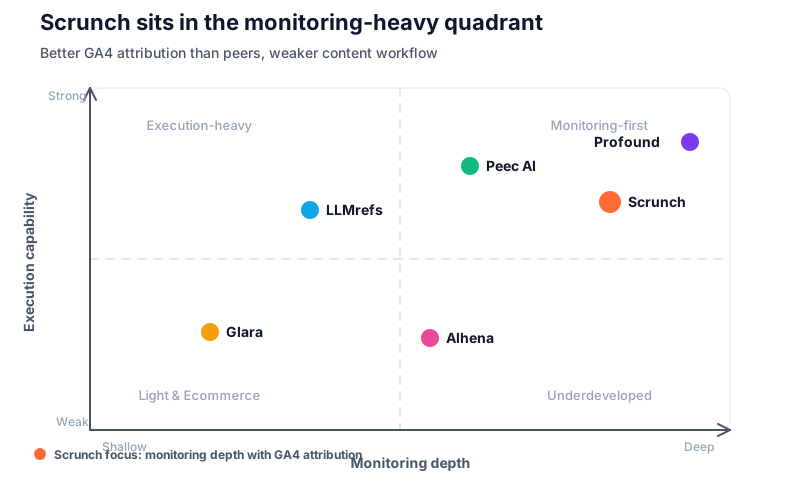
Scrunch AI is a serious AI visibility monitor for teams that already have analytics discipline. It is not the first tool I would buy for a solo Shopify store, but it is credible for a mid-market DTC brand that needs prompt monitoring, citation tracking, persona filters, site audits, and GA4 attribution in one place.
The score is 8.0/10 for ecommerce buyer fit. Scrunch earns that score because its monitoring depth and GA4 AI referral story are stronger than most first-wave GEO trackers. The penalty comes from price, prompt-credit math, limited Starter engine coverage, beta execution features, and the fact that AXP is still a future bet rather than a generally available Starter capability.
For ecommerce operators, the buying question is simple: will someone act on the data every week? If the answer is yes, Scrunch can help connect AI visibility to traffic, citations, page audits, and category actions. If the answer is no, a cheaper tracker or manual prompt audit is more rational.
| Dimension | Score | Ecommerce read |
|---|---|---|
| Ecommerce buyer fit | 8.0 | Strong for staffed DTC teams; too heavy for single-store curiosity. |
| Monitoring depth | 8.5 | Prompt, persona, funnel-stage, citation, sentiment, and AI referral monitoring are the core value. |
| Actionability | 7.1 | Useful diagnostics, but Insights and Site Audits still need expert interpretation. |
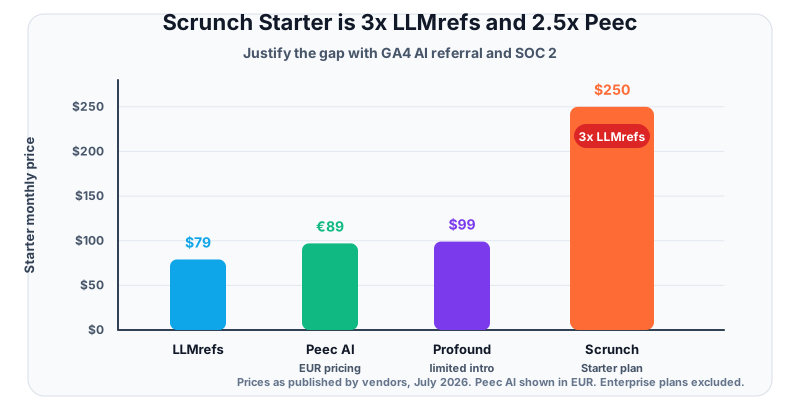
| Pricing value | 7.2 | Starter at $250/month is defensible for teams with process; expensive before workflow exists. |
| Evidence quality | 7.4 | Researched from public pages, third-party reviews, and case material, not hands-on tested. |
What Scrunch AI Does
Scrunch starts with prompt tracking. Teams group prompts into topics, monitor whether the brand appears in AI answers, compare against competitors, and inspect cited sources. For DTC teams, that maps to category discovery, product comparison, trust, return policy, gifting, sizing, and “is this brand legit?” prompts. The value depends on building a tight prompt set rather than chasing every possible buyer question.
GA4 AI Referrals are the clearest differentiated feature. The practical promise is that you can see ChatGPT referral sessions, bounce rate, conversion behavior, and other engagement signals inside the analytics workflow your team already uses. That matters because AI visibility alone is not revenue; AI-referred sessions that land on category, PDP, comparison, or FAQ pages are closer to an operating metric.
Insights are useful but should be treated as beta-quality guidance, not an autopilot. Scrunch can surface visibility gaps, source gaps, sentiment patterns, and competitor wins, but the ecommerce team still has to decide whether the fix is a PDP rewrite, comparison page, third-party review push, schema cleanup, or technical crawl improvement.
Site Audits help identify whether important pages are readable to AI crawlers and agents. This is diagnostic, not a repair workflow. The useful output is a queue of pages with weak answer structure, blocked content, thin facts, JavaScript-heavy rendering, or missing entity context. Someone still has to make the content, template, and technical changes.
AXP, Scrunch’s Agent Experience Platform, is the future bet. It is described as a way to serve a cleaner AI-readable version of a site to agents, but it is limited pilot, not generally available, and Starter customers do not get AXP. Buying Scrunch for AXP today is a bet on a future enterprise feature, not a current capability.
Pricing and Value
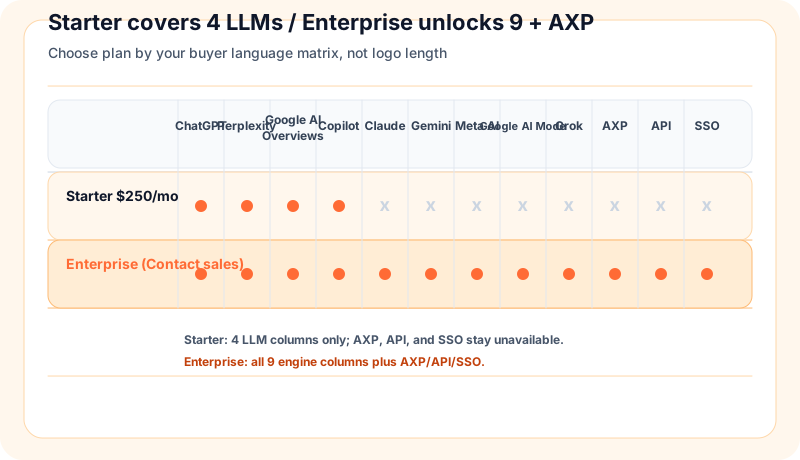
The Starter plan is the key buying threshold for ecommerce teams: $250/month, 125 unique prompts, 5 site audits per month, 1 brand workspace, 5 user licenses, and coverage across ChatGPT, Perplexity, Google AI Overviews, and Copilot. Enterprise is contact-sales and is where Claude, Gemini, Meta AI, Google AI Mode, Grok, AXP, API access, and SSO belong.
| Plan | Price | Included | Ecommerce read |
|---|---|---|---|
| Starter | $250/month | 125 unique prompts, 4 engines, 5 site audits, 1 workspace, 5 users | Realistic only if AI visibility has an owner and a weekly action loop. |
| Enterprise | Contact sales | Expanded engines, AXP, API, SSO, larger limits, procurement support | Better fit for multi-brand, multi-market, or compliance-heavy teams. |
The prompt-credit trap is the budget issue. A 125-prompt Starter limit sounds comfortable until you multiply it by engines, competitors, markets, personas, and funnel stages. A simple setup of 125 prompts across 4 engines creates 500 engine checks, and a more practical DTC baseline of 30 prompts across 4 engines already consumes 120 prompt-engine combinations before you add competitors or countries.
That math changes how I would evaluate Scrunch. I would not start with every category. I would pick one money category, 30 prompts, three buyer personas, three funnel stages, and a short competitor list. If Scrunch turns that setup into content, citation, crawl, or analytics actions, the $250/month case gets stronger.
What We Like
The GA4 integration is the most ecommerce-specific reason to care. Visibility scores can become vanity metrics, but AI referral sessions, bounce rate, conversion behavior, and landing-page paths give operators a way to ask whether AI answers are producing engaged traffic.
Persona and funnel-stage filtering fit how buyers actually research products. A first-time category shopper, a comparison shopper, and a skeptical repeat buyer ask different questions. Scrunch gives teams a way to separate those journeys rather than averaging every prompt into one visibility number.
The 7-day free trial lowers first-test risk. I would use the trial to connect analytics, create one category topic, define competitors, and verify that the dashboard creates specific work instead of broad curiosity.
SOC 2 and enterprise security signals matter for larger DTC organizations. They are not useful for every Shopify seller, but they can shorten procurement for teams with agencies, multiple users, data policies, and security review.
The UI and monitoring workflow appear clean in public materials and third-party reviews. That matters because AI visibility is only valuable if someone can review it repeatedly without turning every week into a spreadsheet exercise.
What We Don’t Like
The first weakness is the prompt-credit trap. Scrunch can become expensive if a team spreads Starter across too many prompts, engines, personas, markets, and competitors before learning what actions the data should drive.
The second weakness is that Insights are still beta in buyer terms. They may surface useful opportunities, but this review would not treat them as a replacement for an experienced SEO, content, PR, or technical operator.
The third weakness is AXP expectation-setting. AXP is compelling, especially for JavaScript-heavy ecommerce catalogs, but it is limited pilot, not generally available, and unavailable to Starter customers. It should not be the reason a small team buys the entry plan.
The fourth weakness is Starter engine coverage. Starter covers ChatGPT, Perplexity, Google AI Overviews, and Copilot. That is useful, but teams that need Claude, Gemini, Meta AI, Google AI Mode, or Grok have to model the Enterprise path.
The fifth weakness is reporting. Cairrot’s hands-on review called out weak reporting, suspicious AI Search Trends data, and onboarding prompts that produced a 1% citation rate because default prompts were poorly matched. Those are solvable workflow issues, but they show why teams should validate setup quality before trusting trend lines.
Alternatives
| Alternative | Better when | Trade-off |
|---|---|---|
| LLMrefs | Budget matters most and the team wants broad AI visibility tracking at $79/month. | Less enterprise monitoring depth and no Scrunch-style GA4 attribution story. |
| Peec AI | You want faster recurring competitor, source, and alert workflows around EUR89/month. | Less enterprise procurement weight and a different analytics posture. |
| Profound | You need deeper enterprise AEO evaluation, content workflow context, and larger-team support. | Can become a heavier buying motion than a DTC team needs. |
| Alhena AI | Ecommerce-native shopping assistance and customer-question context matter more than AEO monitoring. | It is not a direct Scrunch replacement for prompt and citation monitoring. |
Scrunch is most defensible when the team has analytics maturity and wants to connect AI visibility to AI referral traffic. LLMrefs is the price-led route, Peec AI is the recurring-diagnostics route, Profound is the deeper enterprise-AEO route, and Alhena AI is the ecommerce-assistant route.
Ecommerce Setup I Would Run First
I would not launch Scrunch with a giant keyword universe. I would start with one category and enough structure to learn quickly:
| Setup item | First-pass configuration |
|---|---|
| GA4 | Connect GA4 first, then verify ChatGPT referral sessions, bounce rate, conversion paths, and landing pages before judging value. |
| Prompts | 30 prompts: 10 discovery, 10 comparison, 5 trust, and 5 post-purchase or policy prompts. |
| Engines | 4 Starter engines, which turns 30 prompts into 120 prompt-engine checks. |
| Personas | 3 personas: new buyer, comparison shopper, and skeptical buyer. |
| Funnel stages | Discovery, comparison, and post-purchase/support. |
| Pages to audit | Homepage, top category page, 3 PDPs, reviews page, shipping/returns page, and one comparison page. |
| Weekly action | Fix one owned page, one citation gap, and one crawler-readability issue before expanding. |
This setup keeps Scrunch accountable. The platform should show which AI engines mention the brand, which sources shape the answer, whether AI-referred visitors engage, and which pages need cleanup. If the team cannot turn that into weekly changes, downgrade to LLMrefs, Peec AI, or a manual prompt sheet.
Sources Checked
Primary and vendor sources checked on 2026-07-06:
Third-party and competitor sources checked on 2026-07-06:
Comments