The quick decision
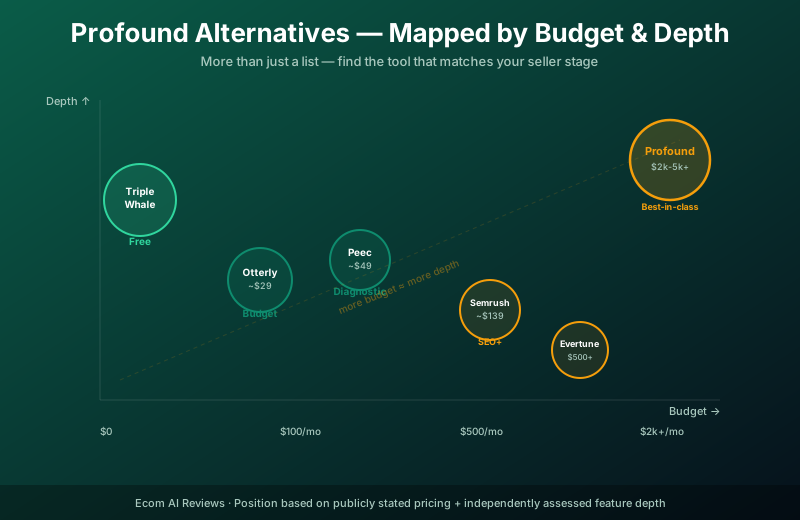
Profound is the category ceiling. It has the broadest monitoring story, Prompt Volumes, server-log Agent Analytics, enterprise controls, and Agents that can turn findings into approved content workflows. If you are a large brand, agency, or retailer with a real AEO program, Profound belongs on the shortlist.
Most ecommerce sellers are not there yet.
If your real question is “does ChatGPT mention my store?”, you do not need Profound. If your real question is “which source gaps are making competitors win?”, you might need Peec AI or Otterly.AI first. If your real question is “how do we report AI visibility to leadership, understand crawler behavior, and plan content from real prompt demand?”, then Profound starts to make sense.
The mistake is treating “best platform” and “best next purchase” as the same thing. For DTC teams, they usually are not.
Profound alternatives by seller need
| If your need is… | Best starting point | Budget signal | Why it fits |
|---|---|---|---|
| ”Does ChatGPT mention us at all?” | Triple Whale | Free entry point | Shopify-native baseline before a team commits budget |
| ”Track a focused prompt set every month” | Otterly.AI | $29/mo entry tier | Low-risk first paid monitor with enough structure to build the habit |
| ”Which sources make competitors win?” | Peec AI | Public signals vary; verify current plan | Stronger source and citation diagnostics for teams that can act on gaps |
| ”Bundle visibility with shopping and support AI” | Alhena AI | Free; paid from $239/mo | Ecommerce-native option when AI visibility is part of a broader concierge platform decision |
| ”Add AI visibility to an existing SEO stack” | Semrush AI Visibility / Semrush One | Paid SEO suite or AI add-on | Better if the team already reports, plans, and audits inside Semrush |
| ”Run enterprise AEO with crawler logs and prompt demand” | Profound | Custom enterprise | Best fit when AI visibility has become a board-level operating program |
This is the DTC seller version of the shortlist. It is not a generic “14 tools” roundup. The useful question is not how many features each vendor claims. It is whether the next tool will change what your ecommerce team does next week.
When Profound is right
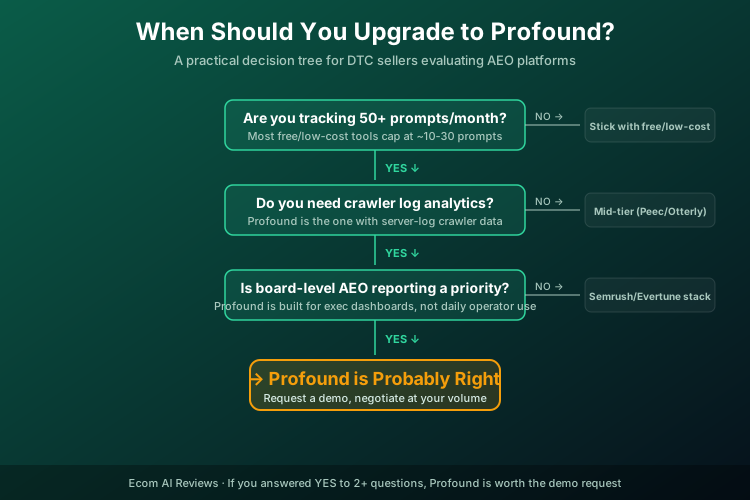
Profound is right when at least two of these are true:
- You are tracking enough prompts, brands, regions, personas, or product lines that lightweight prompt limits no longer describe the market.
- You need to know how AI crawlers actually hit your site, not just whether an answer cited your page.
- You need executive reporting that can defend budget, headcount, content investment, or agency retainers.
- You need AI search-demand research, not only a static prompt list created by your team.
- You have people who can act on findings: content, SEO, ecommerce merchandising, PR, reviews, technical SEO, and analytics.
That last point matters most. Profound can surface more data than a smaller tool. It cannot make an under-resourced team suddenly execute every content, schema, feed, review, and outreach task the data reveals.
Alternative 1: Triple Whale
Triple Whale is the cleanest first stop for a Shopify brand that wants a no-cost AI visibility baseline. It is not a full Profound replacement. It is a way to answer the first question without budget friction: is ChatGPT mentioning the brand, and what broad source pattern is shaping the answer?
Use Triple Whale if:
- You are on Shopify.
- You have not proven AI visibility deserves paid software yet.
- You want a free baseline before building a recurring prompt workflow.
- You care about ecommerce-native language more than enterprise AEO depth.
Do not pretend it replaces Profound’s research layer. It does not give you Profound’s Prompt Volumes, browser-captured answer intelligence, server-log crawler analytics, or enterprise controls. Its job is simpler: prove whether there is a problem worth managing.
Alternative 2: Otterly.AI
Otterly.AI is the first paid tracker I would consider for many small ecommerce teams. It is affordable, self-serve, and focused enough that a solo seller or lean marketer can build a monthly monitoring habit without turning AI visibility into a procurement project.
Use Otterly.AI if:
- You want a paid step after a manual spreadsheet.
- You can define 10 to 30 buyer prompts that actually matter.
- You want brand reports, competitor checks, and citation views without enterprise pricing.
- You are still learning which prompts are worth tracking.
The trade-off is depth. Otterly.AI can help you monitor the category. It is not built to answer every enterprise AEO question, and it will feel cramped once you need broader prompt coverage, deeper source intelligence, or AI crawler analysis.
Alternative 3: Peec AI
Peec AI is the better Profound alternative when the team has moved past “are we mentioned?” and into “why are competitors winning?” Its strongest angle is source and citation diagnostics: which domains, URLs, and source types appear when AI engines recommend competitors.
Use Peec AI if:
- Someone owns content, SEO, reviews, PR, or technical follow-up.
- You need source gaps, not only visibility scores.
- You are comparing competitors across recurring prompts.
- You want a lighter tool before enterprise AEO budget.
Peec AI is still not Profound. Treat it as a diagnostic layer, not a complete enterprise platform. It can help a team decide which assets or mentions to build next. It does not replace Prompt Volumes, Agent Analytics, or Profound’s create-side Agents.
Alternative 4: Alhena AI
Alhena AI is the Profound alternative to consider when AI visibility is not the only buying job. It combines an ecommerce shopping assistant, support concierge, and product-level AI visibility claims in one platform.
Use Alhena AI if:
- You want product-level AI visibility tied to a live ecommerce catalog.
- Your team also needs onsite shopping assistance or support automation.
- Shopify or DTC fit matters more than an enterprise AEO command center.
- You are comfortable validating vendor-reported SKU-level and revenue-attribution claims before relying on them.
Alhena AI is not the cleanest replacement for Profound’s enterprise monitoring depth. Its argument is bundle fit: if shopping, support, and AI visibility should share one product knowledge layer, Alhena may be more practical than a standalone AEO suite.
Alternative 5: Semrush
Semrush is the pragmatic alternative for teams that already live in an SEO suite. If your team already uses Semrush for keyword research, site audits, content planning, competitor tracking, and reporting, adding AI visibility inside that stack may be cleaner than buying a separate AEO platform.
Use Semrush if:
- SEO is already managed inside Semrush.
- AI visibility is an add-on to existing search reporting.
- The team wants one operating dashboard more than a specialized AEO system.
- You need classic SEO and AI visibility connected in the same workflow.
The trade-off is specialization. Semrush is broader than an AI-visibility point solution, which is exactly the appeal for some teams. But if AI answers have become the main battleground, a dedicated platform like Profound, Peec AI, or Otterly.AI may give cleaner category-specific workflows.
Alternative 6: Stay manual for now
For a small store with fewer than 10 serious prompts, the best Profound alternative may be no software at all.
Start with the 50 ecommerce AI search prompts guide and a spreadsheet. Check the prompts manually across ChatGPT, Perplexity, Google AI Overviews or AI Mode where available, and whichever engine your customers actually use. Record whether your brand appears, which competitors appear, what sources are cited, and what page or asset you need to improve.
Manual tracking is not scalable, but it teaches the right questions:
- Which buyer prompts matter?
- Which competitors appear repeatedly?
- Which cited sources influence answers?
- Are owned pages, product pages, category pages, reviews, or third-party mentions missing?
- Did the team act on the findings?
If the manual check produces no action, software will mostly make the inaction prettier.
What cheaper alternatives cannot replace
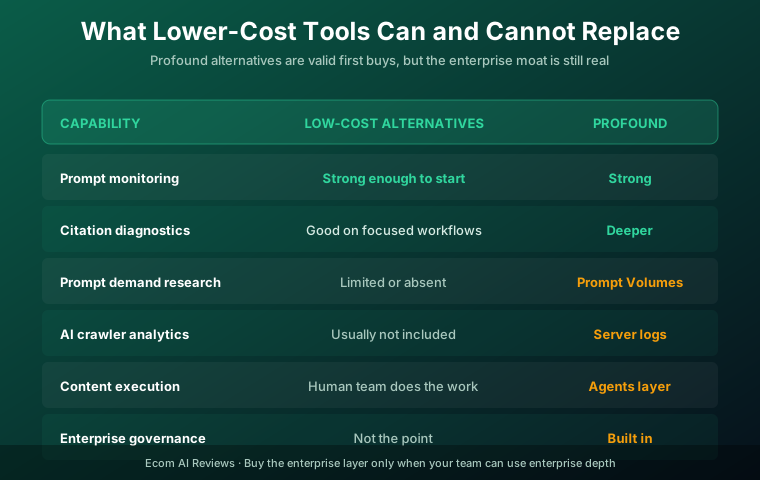
The honest version of this guide is not “Profound is too expensive, so ignore it.” The honest version is: buy the depth only when you can use the depth.
Cheaper alternatives generally cannot replace:
- Prompt Volumes. Profound’s AI-search demand layer is the closest thing this category has to keyword research for answer engines.
- Agent Analytics. Server-log AI crawler analytics is a different class of evidence than front-end prompt monitoring.
- Enterprise coverage. Broad engine support, regions, personas, governance, compliance, and reporting matter for large brands.
- Agents. Profound’s create-side workflow is not just a dashboard. It can help research and produce AEO content with human approval.
- Board-level confidence. A DTC marketer may not need this. An enterprise team often does.
Those advantages are real. They are also the reason Profound can be the wrong next step for a lean ecommerce team. Enterprise capability becomes wasted spend when the team only needed a focused monthly monitor.
Bottom line
Choose Triple Whale if you are a Shopify brand and want the free first read.
Choose Otterly.AI if you want the easiest low-cost paid tracker after a manual prompt spreadsheet.
Choose Peec AI if source and citation gaps are now the main workflow.
Choose Alhena AI if AI visibility should be bundled with ecommerce shopping assistance and support automation.
Choose Semrush if AI visibility should live inside your existing SEO stack.
Choose Profound when AI visibility has become an enterprise operating program with budget, ownership, reporting needs, and enough execution capacity to use the data.
For the broader category view, read the best AI visibility tools for ecommerce, the Profound review, the Otterly.AI review, the Peec AI review, and the Alhena AI review.
Comments