How to choose
Profound is the stronger platform. Peec AI is the better first buy for most DTC sellers.
That is the honest split. Profound has the deeper data story: prompt-demand intelligence, broad engine coverage, server-log crawler analytics, enterprise compliance, and Agents that can draft and publish AEO content with human approval. It is the tool you consider when AI visibility has become a funded program, not a side project.
Peec AI wins when the question is more practical: “Which prompts are we losing, which sources are AI engines citing, and what should our content or SEO owner fix next?” It gives a DTC team most of the recurring monitoring and source-diagnostic workflow without forcing a four-figure enterprise contract.
Our own scoring reflects that lens. Profound scores 7.0/10 on Ecom AI Reviews because it is powerful but poorly matched to smaller ecommerce budgets. Peec AI scores 8.1/10 because it is more accessible for the Shopify, DTC, and ecommerce agency teams this site is written for.
Winner by scenario
Profound wins when depth matters more than price. If you need Prompt Volumes, crawler intelligence, HIPAA/SOC 2 procurement comfort, broad executive reporting, and content creation workflows tied to monitoring data, Profound is in a different class.
Peec AI wins when value matters more than category dominance. If your team needs to track prompts, benchmark competitors, inspect sources and citations, export data, and turn gaps into weekly work, Peec is the more sensible DTC default.
Use this shortcut:
| Scenario | Better pick | Why |
|---|---|---|
| Solo founder or small Shopify team | Peec AI | Profound is too heavy before the team proves a recurring AI visibility workflow. |
| DTC brand with a content or SEO owner | Peec AI | Source gaps can become content, review, PR, and technical tasks every week. |
| Enterprise retailer or large brand | Profound | Prompt Volumes, crawler logs, compliance, and governance justify the platform. |
| Ecommerce agency serving many clients | Peec AI first; Profound for enterprise accounts | Peec’s team access and country coverage fit recurring reporting; Profound fits larger retainers. |
| Team that wants AI content workflows built into the platform | Profound | Agents move beyond monitoring into creation and publishing. |
Pricing: the real DTC cost
The price gap is not cosmetic. It changes who can actually use the product.
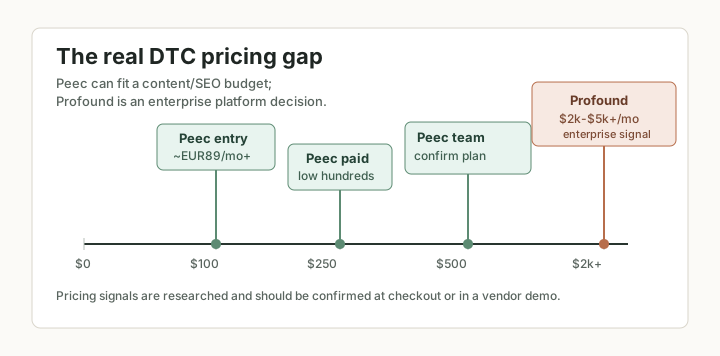
Peec AI’s public pricing signals appear to start around EUR89/month. That is still real money for a small store, but it sits inside a normal content or SEO software budget. Its plan packaging also appears more team-friendly than enterprise-led alternatives; confirm current seat, country, export, and API limits directly before budgeting.
Profound’s public pricing signals are messier. Older public references cite Starter around $99/month and Growth around $399/month, while the actual sales motion is enterprise-led and real deployments are commonly discussed in the $2,000-$5,000+/month range. Profound also has plan constraints in older signals: one seat on Starter, three seats on Growth, and one region on Starter/Growth.
For a DTC seller, that means the cost is not just subscription price. It is the cost of the team required to use the data. Profound only pays off when someone can operationalize prompt research, crawler logs, content workflows, governance, and executive reporting. Peec can pay off with a much smaller operating loop: find source gaps, assign fixes, rerun prompts, and report what changed.
AI visibility depth
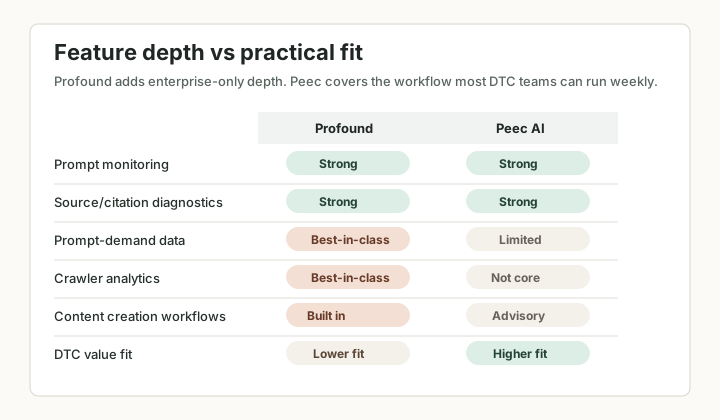
Profound’s moat is data depth. The vendor cites 1.3B+ total real user prompts and 170M+ new monthly prompts for Prompt Volumes. In the Profound review, that is the feature we call the category’s real moat: Prompt Volumes is closer to keyword research for AI conversations than ordinary prompt tracking.
That matters because most AI visibility tools only monitor the prompts you enter. Profound can also tell a large brand which AI conversations are happening in the first place. For an enterprise team trying to own a category, that is a strategic advantage.
Peec AI is more focused. It tracks configured prompts across engines, competitors, sources, countries, and projects. Its strength is not discovering every possible consumer prompt. Its strength is making a known prompt set operational: where do we appear, who beats us, which sources get cited, and what should we fix?
For most DTC teams, that narrower job is enough. If you do not yet have a repeatable prompt set, source-gap workflow, and owner for follow-up tasks, Profound’s deeper dataset will mostly show you more work than you can absorb.
Beyond monitoring
Profound is not just a monitor. That is the biggest product difference.
Its Agents can turn findings into content workflows: research, draft, optimize, and publish with a human approval step. Its Agent Analytics reads server logs to show which AI crawlers actually hit your site. Its compliance posture, including SOC 2 Type II and HIPAA, lets it enter procurement conversations that smaller tools may not clear.
Peec AI is closer to a diagnostic workspace. It can show source gaps and actions, but the work still belongs to your team. That is not necessarily a weakness. For a small ecommerce brand, you may want a tool that tells you whether to improve a product page, earn a mention, collect reviews, or update a comparison article. You may not want an enterprise platform that tries to become your content factory.
The key question is whether you need a dashboard or an operating system. Peec is the stronger dashboard for practical DTC diagnosis. Profound is the stronger operating system for enterprise AEO.
Who should choose Profound
Choose Profound when AI visibility is already important enough to have budget, ownership, and governance.
The best-fit buyer is a large retailer, marketplace-adjacent brand, enterprise ecommerce team, or agency serving enterprise accounts. These teams care about the things Profound is built around: broad answer-engine coverage, Amazon Rufus and ChatGPT Shopping relevance, crawler access, prompt-demand modeling, content workflows, compliance, and executive reporting.
Profound also makes sense when the organization wants to connect measurement with content production. If a team can use Agents responsibly, with human review and brand governance, the product moves beyond “what happened?” into “what should we publish next?”
Do not choose Profound just because it looks like the category leader. A small store that has not proven the workflow will likely buy too much tool too early.
Who should choose Peec AI
Choose Peec AI when you need a serious but accessible AI visibility workflow.
The best-fit buyer is a DTC brand, Shopify team, or ecommerce agency that already knows the prompts and competitors worth tracking. Peec is especially useful when someone can inspect cited domains and URLs, separate owned-content gaps from earned-media gaps, and turn the findings into tasks.
It also fits agencies and distributed teams because its public plan signals emphasize collaborative access, multi-country tracking, and exports. That is the kind of practical packaging that matters when several people need to review the same AI visibility story, but confirm the current limits before committing.
Do not choose Peec if no one will act on the findings. A source gap is only valuable when it becomes content, schema, review collection, PR, merchandising, or technical work.
The DTC seller’s decision
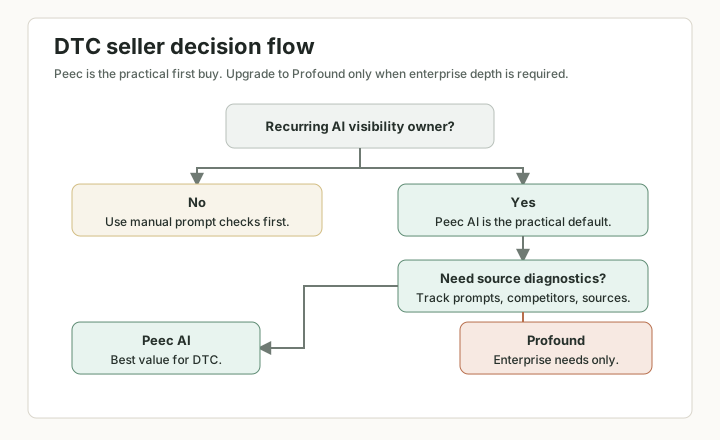
For most DTC sellers, Peec AI is the better answer.
That does not mean Peec is “better” in raw capability. It means Peec is closer to the job a DTC team can actually perform this month: track the buyer prompts that matter, see who wins, inspect the cited sources, and assign work.
Profound becomes the right answer later, when the brand has enough scale to ask enterprise questions:
- Which AI conversations exist beyond our configured prompt list?
- Are AI crawlers reaching the pages we need them to crawl?
- Do we need compliance, SSO, procurement support, and executive reporting?
- Can we responsibly use AI content workflows tied to visibility data?
- Is the monthly budget closer to an enterprise platform than a content tool?
Until those questions are real, buy the workflow you can sustain. For most ecommerce teams, that means Peec AI first, Profound only when the program outgrows source diagnostics.
Evidence caveat
This comparison is researched, not hands-on tested.
Ecom AI Reviews has not tested a live Profound or Peec AI workspace for this comparison. The article uses our existing researched reviews, public pricing and product signals, and the site’s ecommerce-first scoring lens. Confirm current plan limits, pricing, engines, seats, countries, exports, API access, and compliance requirements directly before buying.
That caveat matters because both vendors have incentives. Profound’s own comparison naturally emphasizes enterprise depth. Peec’s own comparison naturally emphasizes value and team accessibility. The neutral DTC answer sits between them: Profound is more powerful; Peec is usually the better value.
Bottom line
Profound costs more because it does more. Peec AI wins for most DTC teams because it does enough.
If AI visibility is a board-level enterprise program, shortlist Profound. If it is a recurring content, SEO, or growth workflow inside a lean ecommerce team, start with Peec AI.
For the full context, read the Profound review, the Peec AI review, and the broader best AI visibility tools for ecommerce ranking.
Comments